QUICK ANSWER
Review photographs as a sequence tied to a VIN, lot and date. Use them to identify questions and missing evidence; they cannot replace measurements or a physical inspection.
Check that the photographs belong together
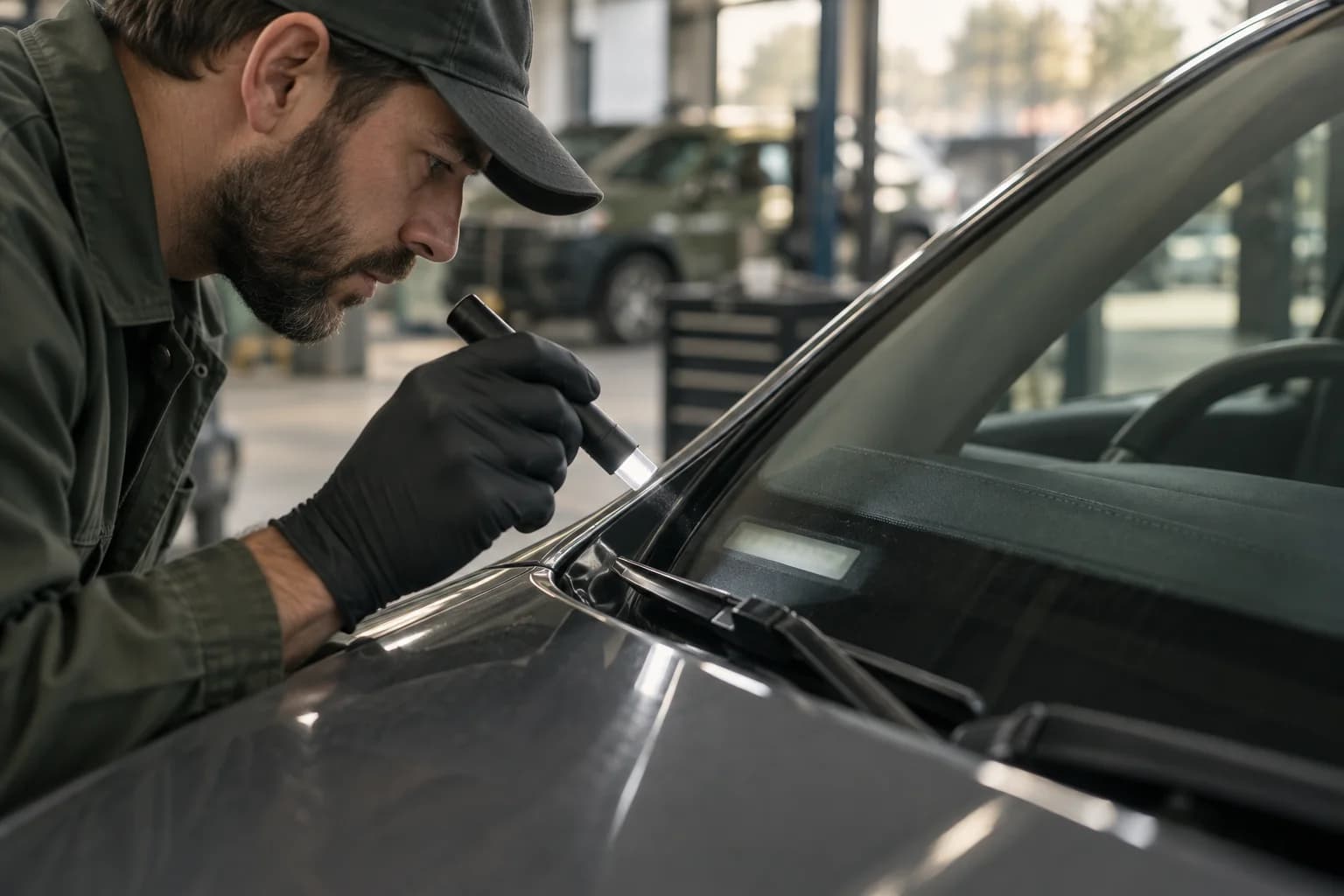
Start with the lot number, visible vehicle identifiers and the date of the source record. Compare body style, colour, wheels and major equipment across views. A difference is a question to resolve, not automatic proof of deception.
Save the sequence or source reference before an auction listing changes. Record which view supports each observation. “Front-left photo: wheel position needs inspection” is more useful than “front looks bad”.
Use a consistent viewing order
Move from overall shape to details so that one dramatic photograph does not dominate your assessment.
| Pass | What to record |
|---|---|
| All four corners | Missing panels, differences in gaps and obvious contact areas |
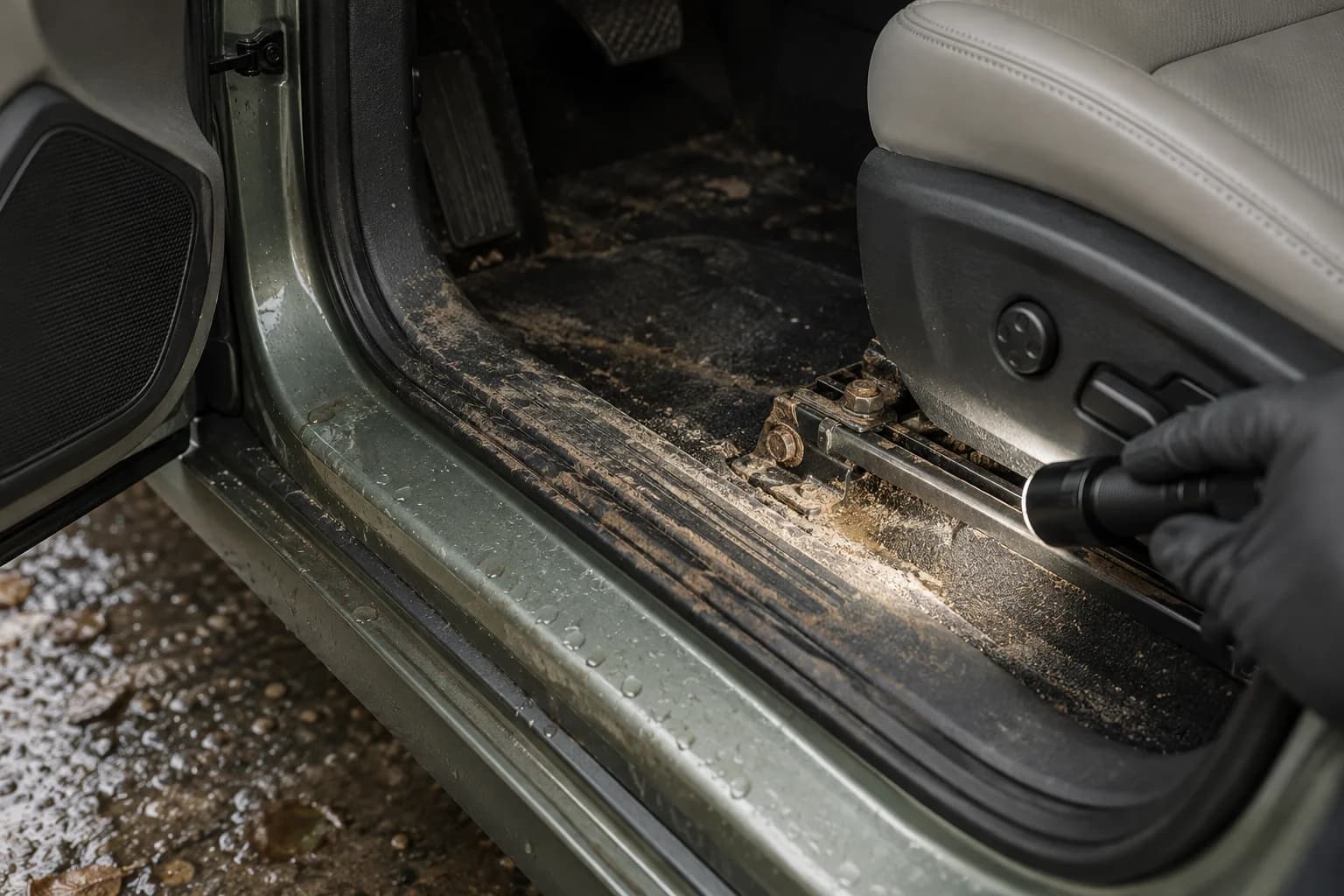
| Both sides | Sills, pillars, doors and wheel positions |
| Cabin | Visible restraints, trim, instrument display and missing components |
| Engine compartment | Visible displacement, missing parts and the limits of the view |
| Luggage area and underside | Available evidence and every important missing angle |
Distinguish an observation from an inference
“The photograph shows a gap” is an observation. “The frame is straight” requires different evidence. Keep the two in separate notes, and avoid describing an airbag system as functional merely because a cover appears intact.
If one view seems inconsistent, request another angle or an inspection. Lighting, perspective, lens distortion and compressed image quality can change how a surface looks. The absence of an underside photograph should remain a missing-data item, not a positive finding.
Turn the review into an inspection brief
Select the five questions most likely to change the purchase decision. Reference the exact photograph for each and ask what assessment is possible at the auction location. Include a request for document and VIN comparison.
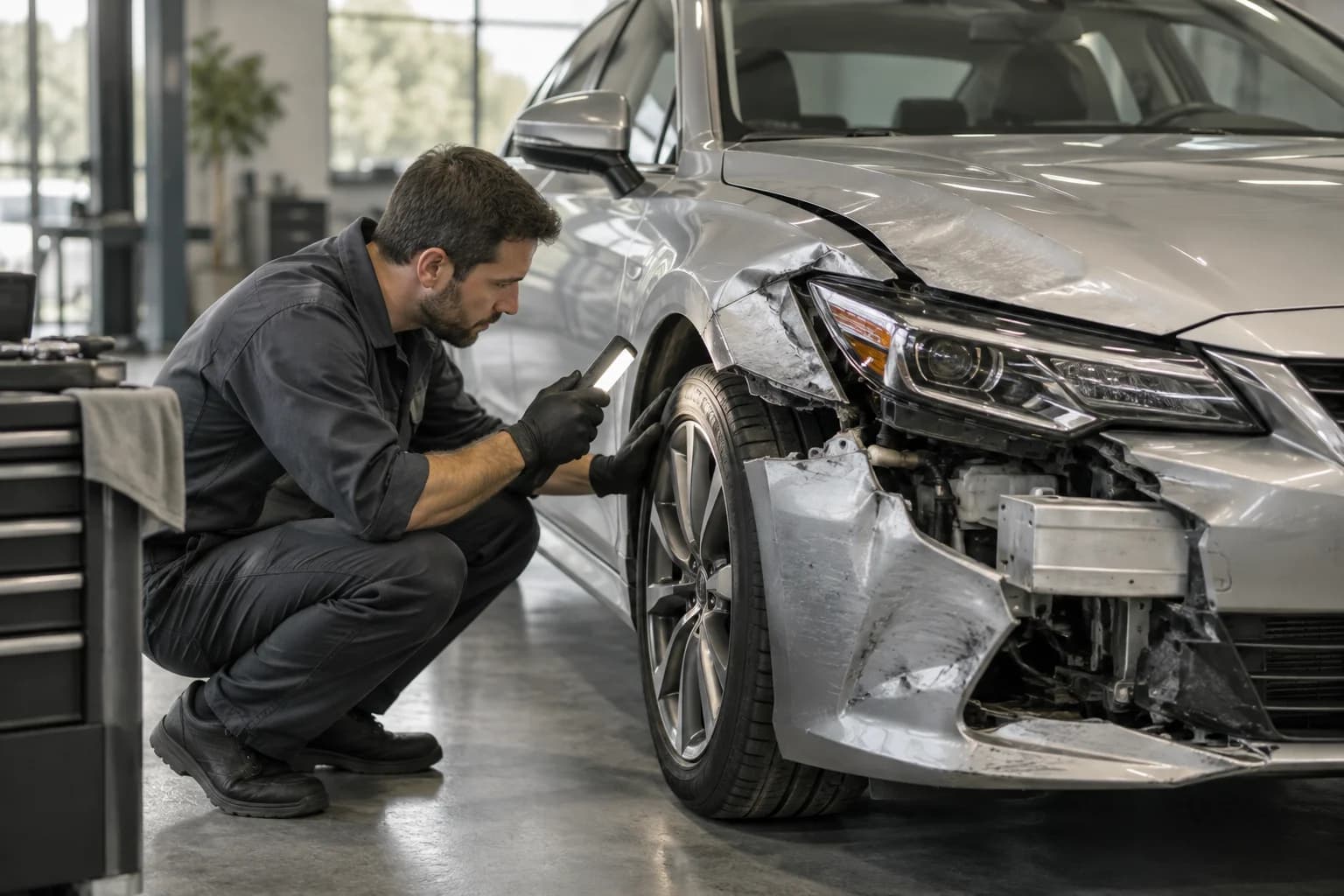
For a car with visible bumper damage, your brief might ask about the supports behind it, the nearby wheel position and the scope of any dismantling needed for a quote. The aim is to obtain evidence for the budget, not to produce a confident remote diagnosis.
Revisit the record after repair claims
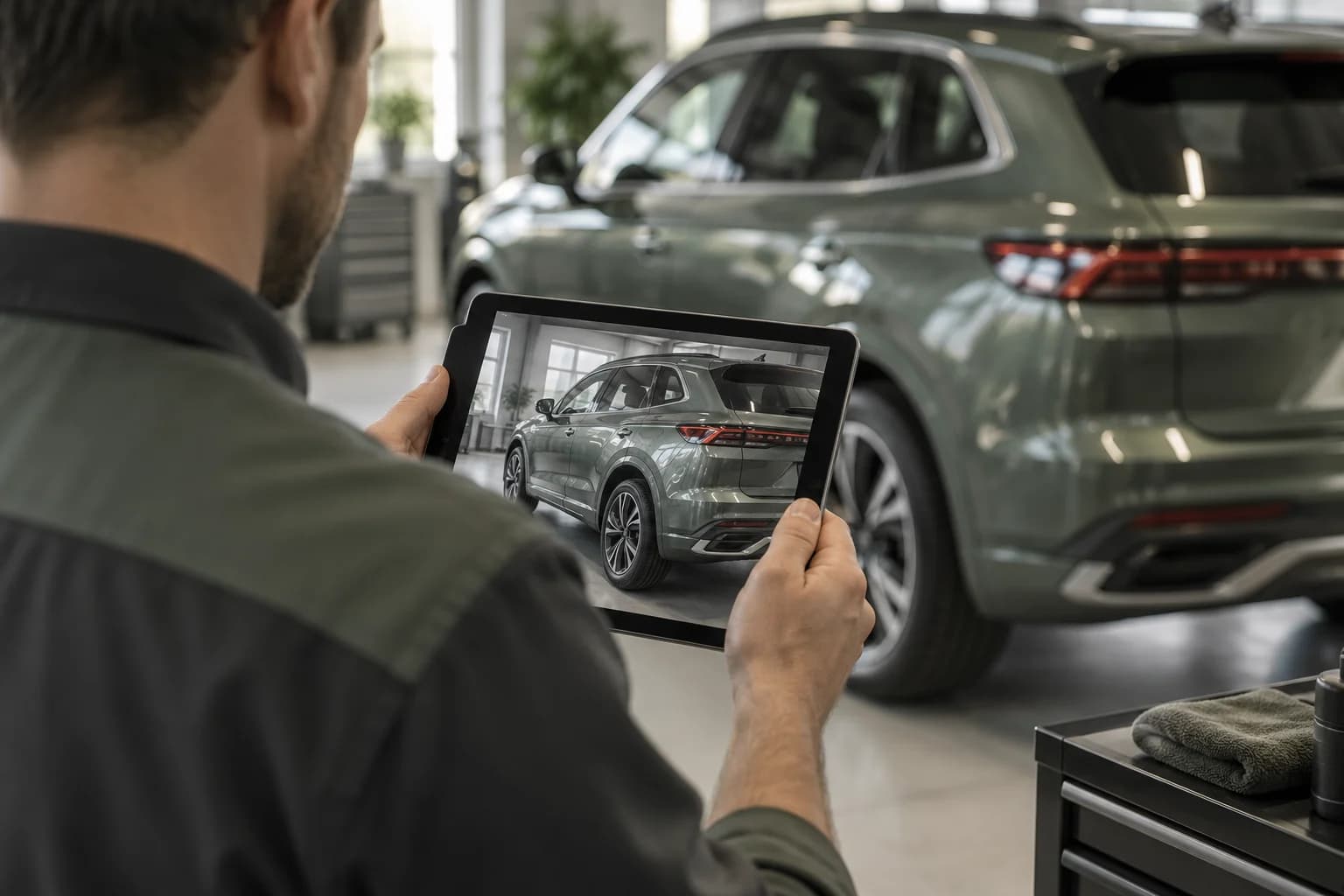
When a seller says the vehicle has been repaired, compare the present photographs with the earlier sequence and request the corresponding invoices. Photos of a finished surface do not describe the hidden repair process. Keep that distinction when negotiating or deciding to inspect.
Before you decide
- Verify the VIN, lot and dates.
- Review every angle in a fixed order.
- Write observations without turning them into diagnoses.
- List missing views explicitly.
- Send a photo-referenced brief to the inspector.
Common questions
Can I estimate the whole repair from photos?
Use photos for an initial scope, but hidden work and labour need a qualified assessment.
Why are older photographs useful?
They provide a dated comparison point, provided the images are correctly linked to the vehicle.
Sources & scope
Primary sources checked on October 9, 2026. Platform rules and jurisdiction requirements can change; verify the conditions applicable to your transaction. Examples and checklists are editorial suggestions.
Start with a specific VIN
Apply the guide to the vehicle records available in our archive.