QUICK ANSWER
A useful VIN check combines identity, a dated auction record, title information and a physical inspection. An empty search result does not establish an accident-free history.
Start with the identity, not the price
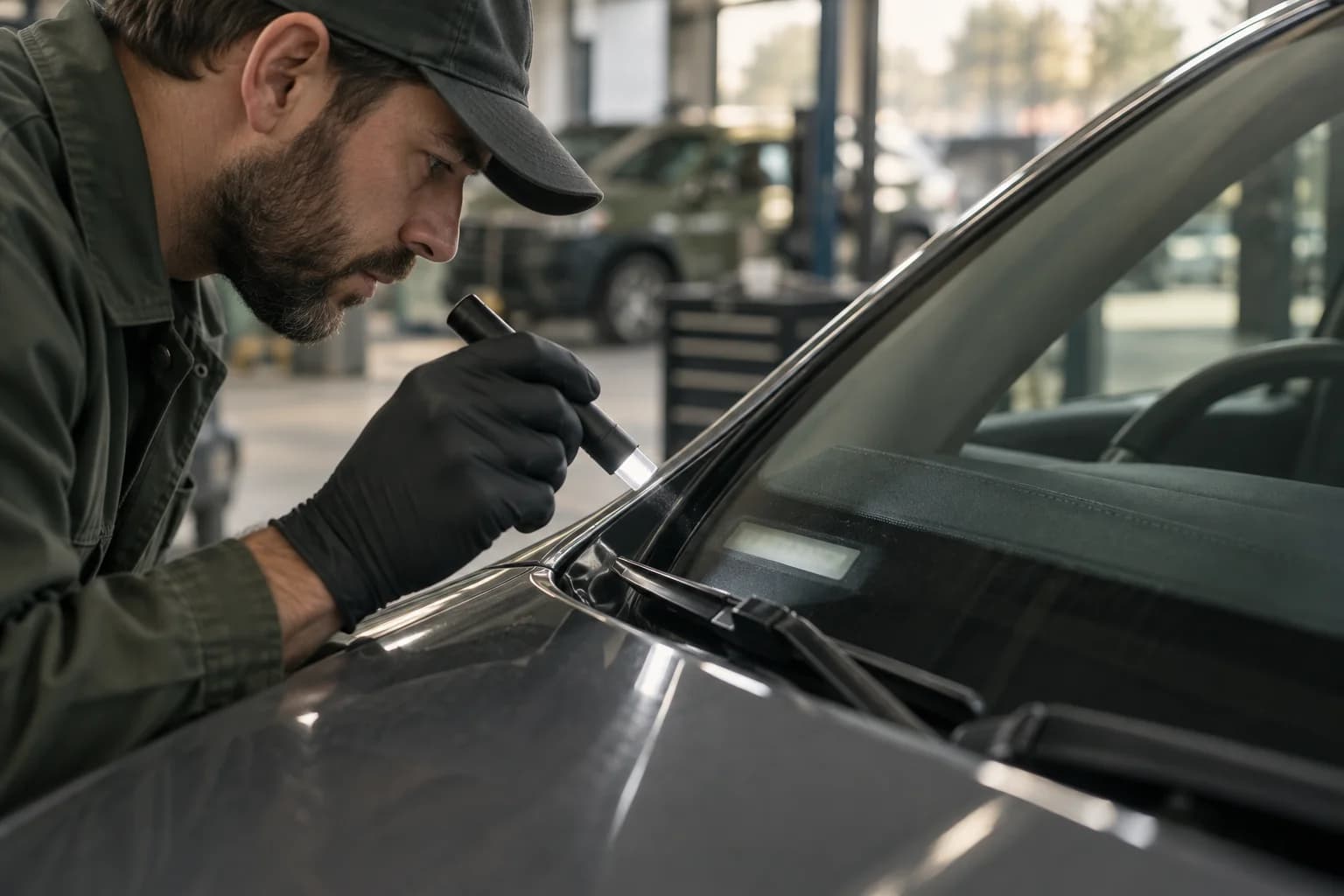
Copy the VIN from the seller’s original listing and compare it with the document and the number on the vehicle. A screenshot, a manually typed advert and a masked auction VIN are different kinds of evidence. Resolve any mismatch before comparing prices. NHTSA’s decoder can help identify encoded vehicle attributes; it is not an accident-history report.
Create a small research folder with the VIN, platform, lot number, listing date and source URL. Keep the original spelling of the model and the document description. This makes it possible to distinguish a correction from a genuinely different car.
Build a timeline you can explain
Put observations in date order. Record the event date separately from the date a website collected it. Two snapshots of the same lot do not prove two sales. Likewise, a later listing may be a relisting rather than a new crash.
For example, a car photographed in March and re-advertised in June with a new bumper raises questions about repairs. It does not, by itself, establish who repaired it or whether structural work was completed. Ask for the invoice and inspection evidence that connect those two observations.
| Record | Useful question |
|---|---|
| Auction photo | When was it captured, and which lot does it belong to? |
| Mileage entry | Miles or kilometres, and what is its reported status? |
| Sale result | Confirmed sale or only a bid? |
| Document | Which authority issued it, and what does it actually say? |
Turn the findings into a decision
Use the record to commission a focused inspection: an earlier front impact suggests checking the repaired area, not simply asking whether the car looks good. Request measurements or specialist checks where appropriate rather than treating photographs as a diagnosis.
Keep three lists: verified facts, unresolved questions and costs still awaiting quotes. Set a maximum bid only after the expensive unknowns have either been investigated or allowed for in the budget. A low price cannot resolve a document mismatch.
Know where VIN Lookup fits
VIN Lookup presents auction observations saved in our database. Search by VIN, open each available lot and compare dates, photographs and document fields. It does not query every possible source whenever you search. Use official title-history and recall resources alongside the archive, especially when a record is missing or contradictory.
Before you decide
- Match the VIN across vehicle, listing and document.
- Save lot identifiers and dates, not just screenshots of the price.
- Check title-history and recall sources separately.
- Write inspection questions linked to specific observations.
- Keep unverified costs out of the “confirmed” column.
Common questions
Does a VIN decoder show accidents?
No. Decoding identity and looking up historical events are separate tasks.
What does “no records found” mean?
It means this source did not return a matching record. It does not prove that the vehicle has never been damaged.
Sources & scope
Primary sources checked on October 9, 2026. Platform rules and jurisdiction requirements can change; verify the conditions applicable to your transaction. Examples and checklists are editorial suggestions.
Start with a specific VIN
Apply the guide to the vehicle records available in our archive.