QUICK ANSWER
History sources answer different questions. Use an auction archive for recorded lots, an appropriate title-history source for documentation, a recall lookup for recall information and an inspection for present condition.
Match the source to the question
Before buying a report, write down the decision you need it to support. “Was this car photographed with damage?” differs from “What title information is recorded?” and “What condition is it in now?” One search result should not be stretched to answer all three.
NMVTIS provides a source of title and other reported vehicle-history information. It is not a complete repair diary. Read the provider’s coverage and limitations, including the dates represented in the report.
Build an evidence matrix
Use a separate row for each unresolved question.
| Question | Evidence to seek |
|---|---|
| Does this record match the car? | VIN comparison and identifying documents |
| What did an auction record show? | Dated lot information and photographs |
| What document history is reported? | Appropriate title-history report and issuing authority |
| Are there relevant open recalls? | Official recall lookup and manufacturer follow-up |
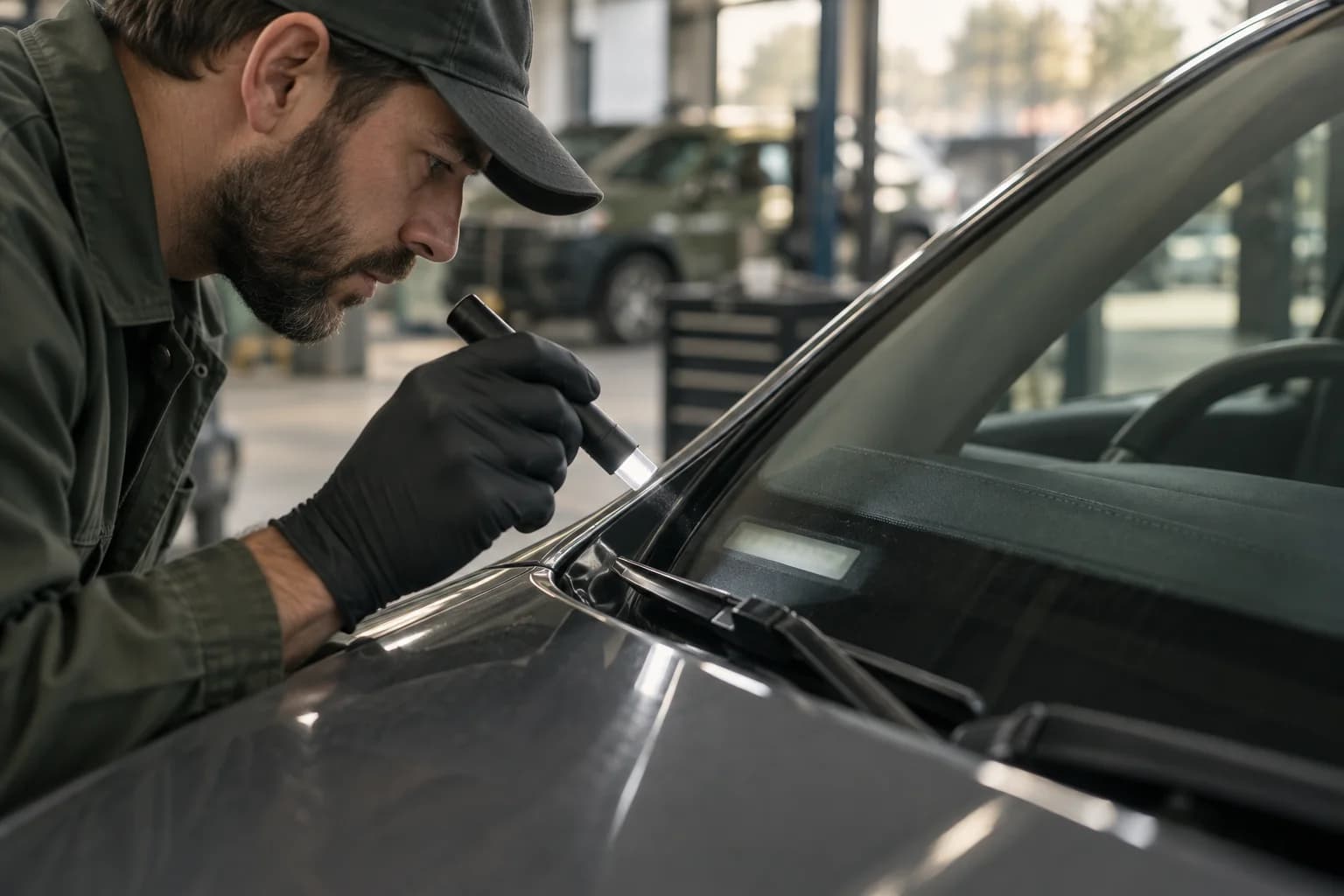
| Is the car currently sound? | Independent inspection and diagnostic evidence |
Understand a missing result
A record may be outside a source’s coverage, unavailable at the time of collection or absent from the saved database. An empty result should therefore remain “no matching record from this source”, not “never damaged”.
If a seller provides a report with no incidents but you find an older auction photograph, verify that the photograph belongs to the same VIN and date. Then ask the seller to reconcile the evidence. Neither automatically discarding the photo nor accusing the seller produces a reliable history.
Check recalls separately
Use the official recall lookup for the relevant market and read its limitations. NHTSA provides a VIN-based recall resource for US vehicles; information about a particular result may need manufacturer confirmation. An auction archive’s lack of a recall field is not a completed recall check.
Record when you checked and save the result. Recall status and repair status are separate from the collision history you may be researching.
Keep an auditable purchase file
Retain the dated source links, documents, photographs, quotations and inspection notes that support your decision. Write a short conclusion listing established facts and unresolved issues. The FTC’s used-car guidance reinforces the value of an independent inspection rather than relying on history alone.
This approach also makes later conversations with a repairer or seller more productive: you can point to the original observation instead of a vague recollection of what a website said.
Before you decide
- Choose sources by the questions they answer.
- Read coverage and date limitations.
- Treat missing entries as unknown, not proof of absence.
- Check recalls independently.
- Combine records with a current physical inspection.
Common questions
Is an auction archive a complete vehicle history report?
No. It represents the auction records available in that archive.
Can several reports replace an inspection?
No. Historical records do not establish the vehicle’s present mechanical condition.
Sources & scope
Primary sources checked on October 9, 2026. Platform rules and jurisdiction requirements can change; verify the conditions applicable to your transaction. Examples and checklists are editorial suggestions.
Start with a specific VIN
Apply the guide to the vehicle records available in our archive.